


Introduction
Education is essential for the overall development of individuals. However, due to various circumstances, many people are unable to complete formal education. For such individuals, non-formal education serves as an effective alternative. The Government of Nepal has been running literacy classes, women and adult schools, non-formal and alternative schools, open schools, and lifelong learning programs to ensure education for all. Under Sustainable Development Goal (SDG) 4, which focuses on quality education, the government has also prioritized non-formal education programs.
Under the Shikharapur Community Learning Center (SCLC), the Shikharapur Open School plays a crucial role in providing education to individuals who missed out on formal schooling. The main objective of this school is to bridge the gap between non-formal and formal education, helping individuals re-enter the education system.
The invaluable support of ONGD-FNEL Luxembourg in strengthening Shikharapur Open School through the Agricultural Entrepreneurship Development and Open School Education for Women and Youth project is much appreciable. The continued partnership, along with support for various social initiatives, has been instrumental in empowering women and youth in our community.
Shikharapur Open School: A Center for Education and Opportunity
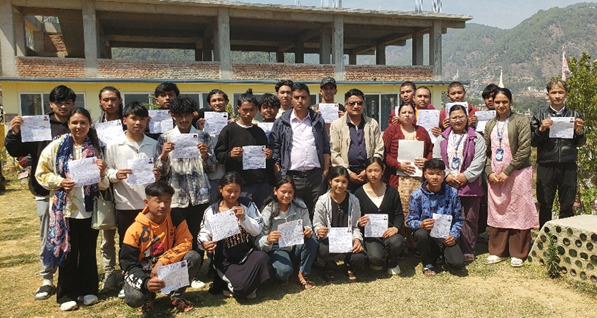
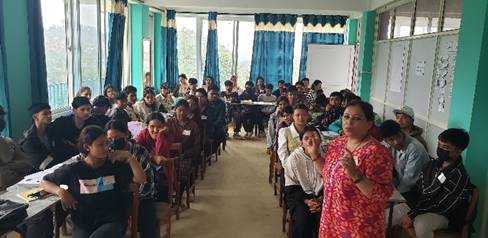
Shikharapur Open School has helped over 800 individuals complete their secondary education. This year, a total of 68 students have enrolled in the basic and secondary levels and have participated in the national examination to advance their academic progress. This also includes residential students of Bottle House, who come from economically disadvantaged and socially marginalized communities, such as the Chepang. They are supported through an agriculture project by ONGD-FNEL. Many of its graduates are now employed in government services, the teaching profession, business enterprises, and social sectors. The school not only serves students from Dakshinkali Municipality but also from neighboring districts such as Makwanpur, Lalitpur, Chitwan, Dhading, Ramechhap, Sindhupalchok, Dolakha, and Dolpa.
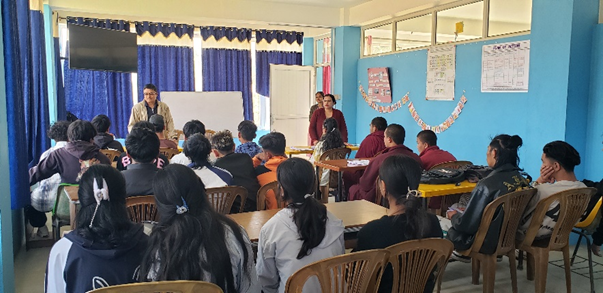
The school runs regular Grade 8 and Grade 10 classes, mainly catering to individuals who had to drop out due to marriage, financial difficulties, geographical barriers, or personal challenges. A significant number of students are women, particularly those who had to discontinue their education after marriage but are now eager to resume their studies.
During the COVID-19 pandemic, many students faced difficulties due to a lack of access to online learning resources. The school has been actively working to bring them back to education. Currently, there are 35 students (12 women, 23 men) in Grade 10 and 33 students (11 women, 21 men) in Grade 8. The school has a diverse student population, with a strong presence of the Tamang and Dalit communities. The age range of students varies from 16 to 45 years.
Classes for Grade 10 are conducted in the morning, while Grade 8 classes take place in the afternoon. The curriculum follows government-approved textbooks and digital learning resources. Some students study from home and visit the school only for exams. The Center for Education and Human Resource Development (CEHRD), Nepal, monitors and provides financial support for the school through Dakshinkali Municipality.
Support from Partner Organizations
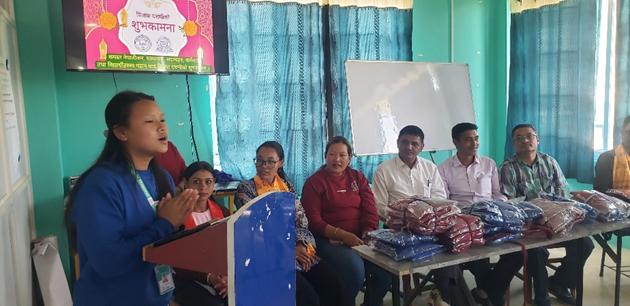
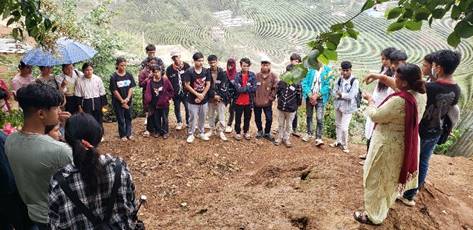
To bring positive change, the school has been collaborating with partner organizations. With the support of ONGD-FNEL (Luxembourg), the school has been able to manage teachers, provide uniforms and stationery for students, and conduct skill development programs such as:
- Agriculture and Computer Training
- Counseling Sessions and different motivational sessions
- Inspirational Programs by Guest Speakers including exposure
Case Study 1: Babita Shrestha – A Story of Responsibility and Dedication
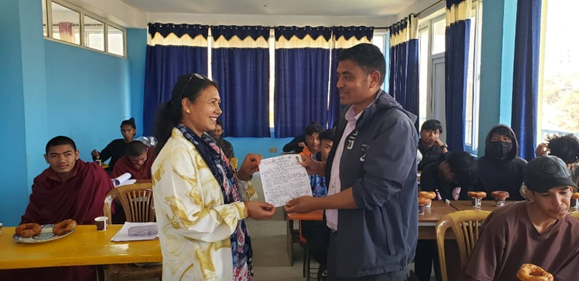
Babita Shrestha, a 40-year-old woman from Dakshinkali Municipality-2, had to drop out of school after getting married during her Grade 10 studies. After marriage, she joined various women’s groups and engaged in agricultural work.
In 2023, she enrolled in Grade 8 at Shikharapur Open School and resumed her education. Her husband works abroad, and her daughter is studying in Grade 12. Despite household responsibilities, Babita studied from home and attended school when possible. She performed exceptionally well in exams and has now appeared for the Secondary Education Examination (SEE). Her dream is to pursue higher education. “I love working at school, and my dream is to complete at least grade 12 and pursue a job. I am truly grateful that Shikharapur Campus provides free bachelor’s level education to open school participants who complete grade 12. This support is a tremendous encouragement for all of us.” – Babita Shrestha
Case Study 2: Ashika – A New Beginning
Ashika, a 17-year-old girl, was born in Boudha, Kathmandu. She got in touch with a young boy from Dakshinkali Municipality through social media and got married while studying in Grade 7. After marriage, she had to leave school, which left her deeply disappointed.
Her new family recognized her passion for education, and her mother-in-law encouraged her to enroll at Shikharapur Open School. Ashika is a bright student and highly motivated. Her teachers appreciate her dedication and enthusiasm. Currently studying in Grade 8, she aims to complete her Grade 10 next year and pursue higher education.
“I don’t regret getting married at a young age, but leaving my studies was heartbreaking. Fortunately, I found Shikharapur Open School nearby. My dream is to continue my education and become a teacher.” – Ashika
Conclusion
Institutions like Shikharapur Open School provide a second chance for individuals who were deprived of education. Through non-formal education, women, working-class individuals, and other marginalized groups can restart their learning journey. The school’s diverse student backgrounds highlight its importance in the community.
With the Nepal government’s non-formal education policies and support from partner organizations like ONGD-FNEL, open schools are helping to ensure quality education and create brighter futures for many individuals.
Case Study Team:
Niroj Shrestha & Lalita Lamichhane,
Shikharapur CLC